
Choosing solar lights for a backyard is easier when you start by thinking about how you use the space. A patio where you sit and relax needs a different kind of lighting from a garden path or a dark corner near the fence. Walk around your backyard after sunset and notice which areas could use better visibility, where you would like a softer decorative glow, and which spots are used for outdoor activities. This gives you a clearer idea of what to look for instead of buying several lights that may not serve a practical purpose.
The type of light should match its location. Solar pathway ground plug lamps work well along garden borders and walkways, helping make routes easier to see at night. For flowerbeds, shrubs, and trees, solar lawn spotlights can direct attention toward particular features without illuminating the entire yard. If you want a more relaxed atmosphere around a seating area, solar fairy string lamps or solar lanterns may be a better fit. Wall-mounted or motion-activated solar lights are worth considering near back doors, garages, and other areas where stronger illumination is useful.
Brightness is another detail worth checking before making a purchase. A gentle glow is often enough for decorative areas, but steps, entrances, and frequently used walkways need more practical illumination. Check the lumen output rather than judging a light only by its appearance in product photos. The beam direction and coverage matter too: a bright light aimed poorly can create glare while leaving the ground around it dim. Warm white light generally creates a softer, more welcoming atmosphere for patios and garden seating, while neutral or cool white may be more suitable where clearer visibility is the priority.
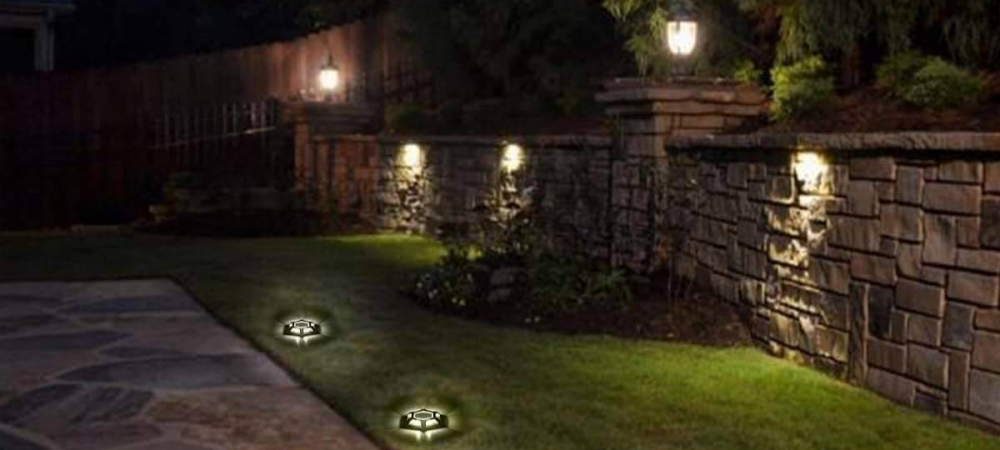
Sunlight exposure can make a noticeable difference in how well solar lights perform. Their panels collect energy during the day and store it in rechargeable batteries for use after dark. A light installed under dense tree cover or beside a shaded wall may not receive enough direct sunlight to provide the expected operating time. Before choosing a location, check how much sun reaches the area throughout the day. If the best position for the light is shaded, a model with a separate solar panel may offer more flexibility, allowing the panel to be placed in a sunnier spot while the light remains where it is needed. Also check the stated battery runtime and remember that cloudy weather and shorter winter days can reduce nighttime performance.
Since backyard lights remain outdoors, their construction and weather resistance should not be overlooked. Check the product's IP rating and installation instructions to make sure it is suitable for exposure to rain, moisture, and dust in its intended location. Consider how the fixture will be mounted as well. For ground stake lights, loosen hard or compacted soil before installation to make insertion easier and help prevent damage to the stakes, while wall-mounted lights require a suitable fixing surface. Once installed, keep the solar panels clear of leaves and dirt so they can receive daylight effectively. The right solar lights are not necessarily the brightest or most expensive models; they are the ones that suit your backyard layout, receive enough sunlight, and provide the kind of illumination you actually need.



厦门斯莱德科技有限公司
 Chengyi North Street, Software Park 3, Jimei District, Xiamen Fujian, China
 +86 188 5929 8629
 sales@solarlightsdo.com


